























What Your Footwear is Leaving Behind: The Hidden Environmental Cost of Plastic-Based Shoes
We don't often think about what happens to our shoes as we wear them. Sure, we notice when they start to look worn or when the soles begin to separate, but what about the invisible trail we're leaving with every step? Recent research has revealed something concerning: conventional plastic-based footwear isn't just an environmental problem when it's thrown away—it's releasing harmful materials into our environment every single day we wear it.
The Microplastic Problem You're Walking On
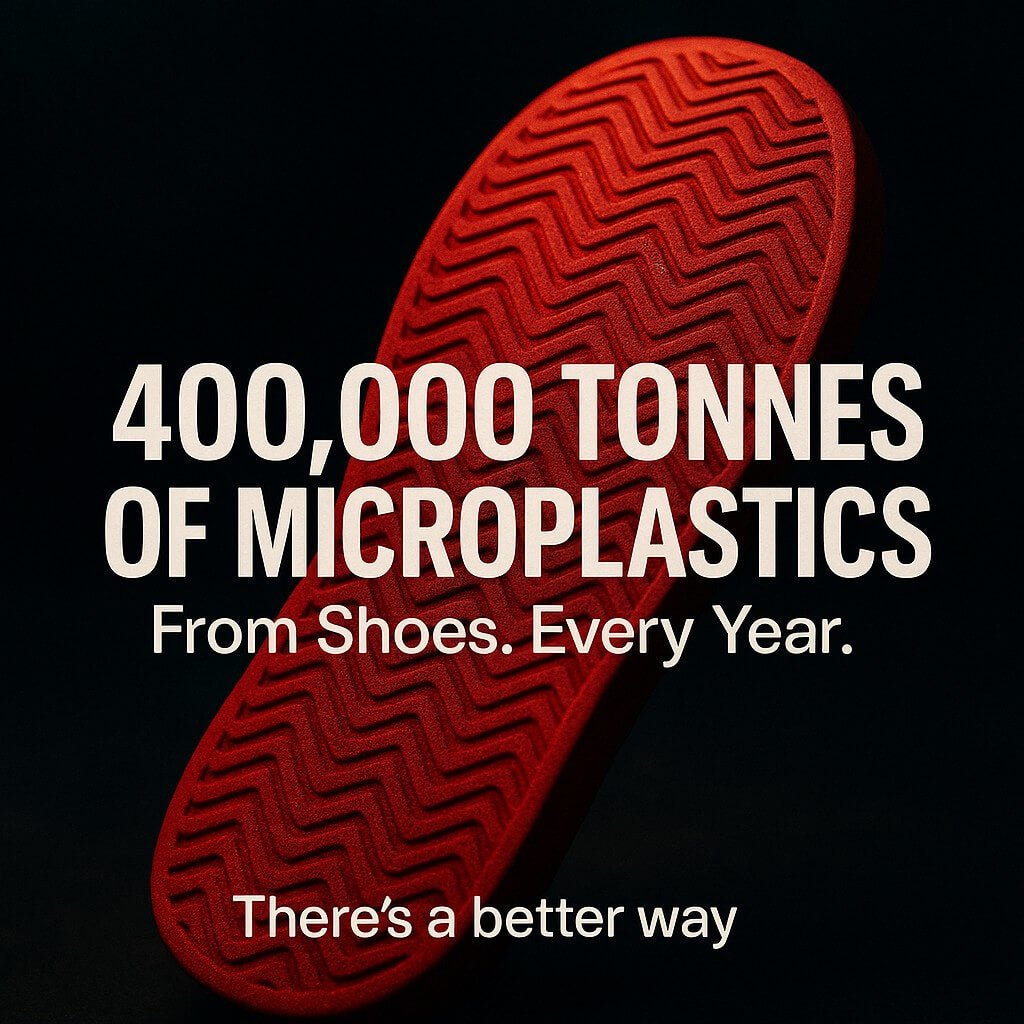
Studies estimate that shoes release between 9,000 and 400,000 metric tonnes of microplastics globally each year through normal wear. To put that in perspective, even the lower estimate equals the mass of the first three floors of the Empire State Building—released annually just from people walking around in their shoes.
Every time you take a step in traditional plastic-based footwear, tiny fragments break off from the soles. These microplastics don't disappear—they persist in soil, wash into waterways, and accumulate in ecosystems. Trail running events alone have shown that shoe outsoles produce significant plastic deposits on natural surfaces, with higher concentrations appearing on sloped and rocky terrain where abrasion increases.
It's Not Just About Waste—It's About Chemistry
The issue extends beyond the physical plastic fragments. Research on shoe sole leachates has revealed that toxic chemicals can seep from these materials when exposed to water, causing harm to aquatic organisms. These chemicals include benzothiazole, a common additive in synthetic rubbers that inhibits plant growth, along with other compounds that have shown toxic effects on algae, water organisms, and fish in laboratory studies.
Sneaker sole fragments have been found to reduce soil's water-holding capacity and leach harmful chemicals that affect plant growth. When you consider that the average person buys seven pairs of shoes annually, and billions of pairs circulate globally, the cumulative environmental impact becomes staggering.
The Rise of Recycled Plastic Footwear: A Double-Edged Sword
In response to growing environmental awareness, many footwear brands have turned to recycled plastics as a "sustainable" solution. While the intention to divert plastic from landfills and oceans sounds admirable, this approach simply transforms one plastic problem into another. Footwear made from recycled plastics still releases microplastics through wear, still contains potentially harmful chemical additives, and still persists in the environment for hundreds of years after disposal.
The reality is that recycling plastic doesn't eliminate its fundamental nature—it remains plastic, with all the associated environmental concerns. Whether virgin or recycled, petroleum-based materials in footwear continue contributing to microplastic pollution with every step.
A Better Alternative: Plant-Based Materials
This is where genuinely sustainable innovation makes a difference. Plant-based materials like sugarcane-blended foams offer a fundamentally different approach to footwear construction. Unlike petroleum-based plastics that persist indefinitely, plant-based materials come from renewable sources and break down more readily in the environment.
Aussie Soles has developed AusLite™, a closed-cell foam blended with sustainably sourced sugarcane, providing the comfort and durability people expect from quality footwear without the environmental persistence of conventional plastics. The material offers proper orthotic support—with podiatrist approval and recommendations for conditions like plantar fasciitis—while treading more lightly on the earth.
The difference isn't just theoretical. When plant-based materials eventually break down, they return to natural carbon cycles rather than accumulating as persistent pollutants. They don't contain the same cocktail of synthetic additives found in petroleum-based plastics, and they represent a renewable resource rather than fossil fuel extraction.
Making Informed Choices About What We Wear
The footwear we choose has consequences that extend far beyond our own comfort. Every pair of shoes represents a decision about the kind of environmental legacy we're leaving—literally with each step we take. With global shoe revenue exceeding $382 billion and billions of pairs sold annually, collective consumer choices have enormous environmental impact.
Consider what happens over a shoe's lifetime: the materials it's made from, what it releases as you wear it, and what becomes of it after disposal. Conventional plastic-based footwear fails on all three counts—it's derived from fossil fuels, sheds harmful microplastics during use, and persists as pollution indefinitely.
Plant-based alternatives like sugarcane-blended foams address these concerns at their source. They're manufactured from renewable agricultural materials, they don't rely on petroleum extraction, and they offer a more responsible end-of-life scenario. When you add genuine orthotic benefits that support foot health and reduce pain from conditions like plantar fasciitis and heel spurs, the choice becomes even clearer.
The Path Forward
We're at a turning point in how we think about everyday products. The convenience and durability that made plastic so popular in the 20th century have become the environmental crisis of the 21st. But we're not stuck with only bad options—innovation in materials science has provided genuine alternatives that don't require sacrificing quality or comfort.
Brands like Aussie Soles demonstrate that you can have properly engineered orthotic footwear with arch support and therapeutic benefits while using eco-friendly materials. Their AusLite™ sugarcane-blended foam offers the performance people need for all-day comfort without contributing to the microplastic pollution that conventional footwear leaves behind.
The next time you're shopping for thongs, slides, or any casual footwear, it's worth asking: what is this made from, and what will it leave behind? Your feet deserve comfort and support, but our environment deserves consideration too. Fortunately, with plant-based options now available, we don't have to choose between the two.
Making the switch to sustainably sourced, plant-based footwear isn't just about feeling good about your purchase—it's about taking tangible action on an issue that affects ecosystems worldwide. Every step you take can either contribute to the problem or be part of the solution. The choice, quite literally, is in your hands—or rather, on your feet.
Check out the Aussie Soles collection here!









Leave a comment (all fields required)